
Back To All Blog Posts
Learning a new skill can become very frustrating very quickly. It’s hard to practice the same thing over and over and only see small improvements. Yet all the best artists, musicians, and public speakers all point back to the same habit: practice, then repeat, then practice again. Progress doesn’t usually come from one big moment; it comes from doing the same thing consistently until it sticks.
What Is Repetition?
Repetition is the act of repeating information or actions to strengthen learning. This can look different depending on what you're trying to learn. Rote repetition is simple: doing or saying something again and again. Spaced repetition is more strategic: reviewing information over time rather than all at once. Both methods work, but they work in different ways.
How Repetition Affects the Brain
Neural Connections
Every time you repeat something, your brain strengthens the pathway associated with that action or idea. The more you use that pathway, the easier it becomes to access. That’s why things that once felt difficult can start to feel automatic.
A study done by UCLA Health in 2024 found that “repetitive practice stabilizes memory patterns in the brain.” This shows that repetition doesn’t just help in the moment, it actually builds a stronger foundation for learning in the future. The study explains that repetition strengthens connections between neurons, improving recall over time.
Memory Formation
Repetition plays a big role in turning short-term memory into long-term memory. When you first learn something, it’s held temporarily. But with repeated exposure, your brain begins to store it more permanently. Frontiers researchers explained in 2018 in their study, ‘Effects of Repetition Learning on Associative Recognition Over Time: Role of the Hippocampus and Prefrontal Cortex. ’ This process involves parts of the brain like the hippocampus and the cortex, which work together to organize and store information.
Spaced Repetition
Not all repetition is equal. Spaced repetition, or reviewing information over time, has been shown to be much more effective than cramming everything at once. Giving your brain time between sessions actually helps strengthen memory. Research in “Persistent activity during working memory maintenance predicts long-term memory formation in the human hippocampus,” published in the National Library of Medicine, found that spaced repetition significantly improves long-term retention compared to massed practice.
Benefits of Repetition
Repetition does more than just help you remember things. It builds confidence. The more familiar something becomes, the less effort it takes to do it. This leads to faster performance and fewer mistakes over time. It also helps turn actions into habits, which is why repetition is used in everything from education to athletics.
Conclusion
Repetition is a powerful tool for learning, even if it doesn’t always feel exciting. It works quietly in the background, strengthening memory and building skills over time. When combined with strategies like active recall and spaced practice, it becomes even more effective. The key is consistency. Doing something once won’t make a difference, but doing it again and again will.
Why Repetition Is the Secret to Getting Better at Anything
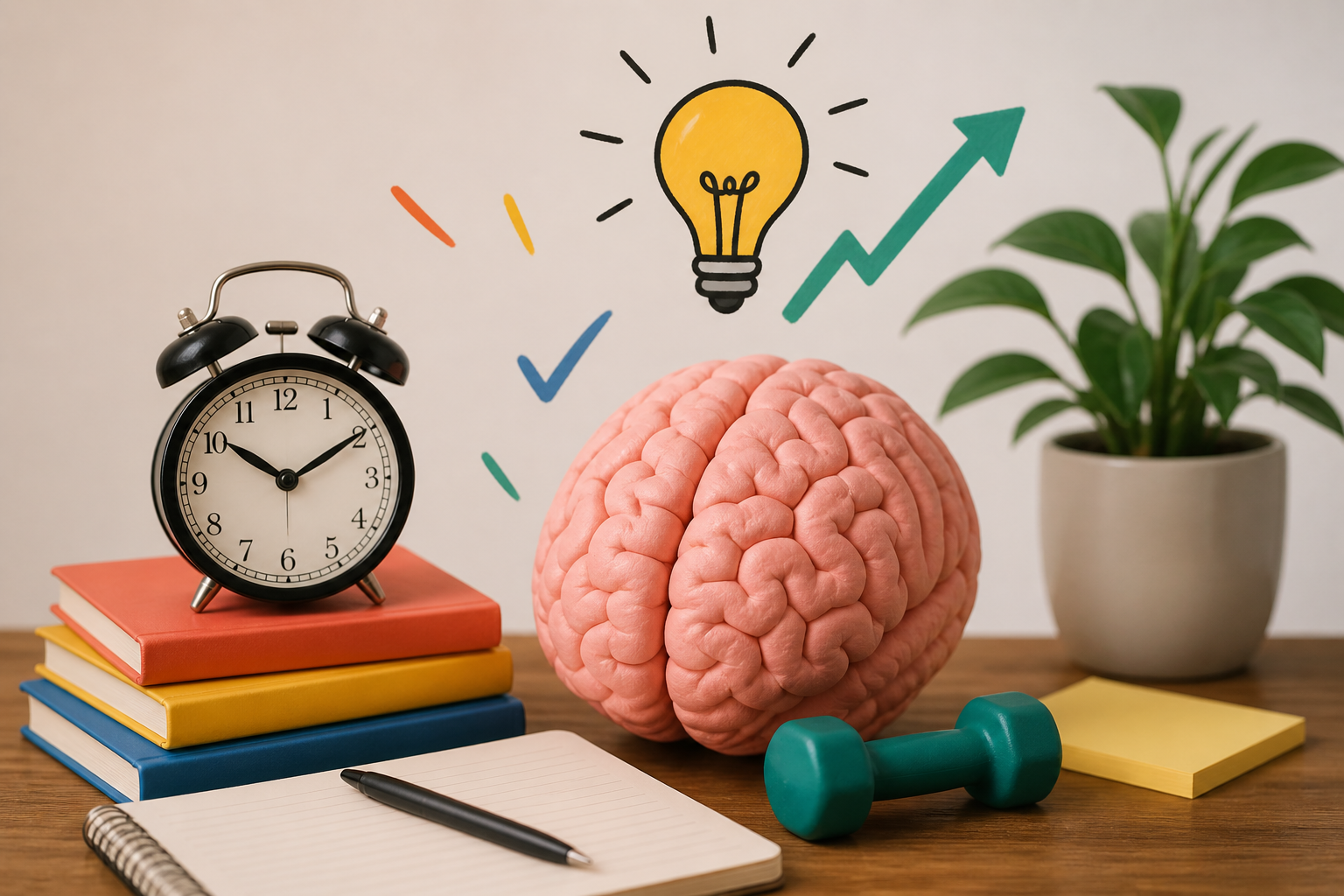
Every practice rep helps your brain build stronger memory, confidence, and skill.
Why Repetition Is the Secret to Getting Better at Anything
Every practice rep helps your brain build stronger memory, confidence, and skill.
Learning a new skill can become very frustrating very quickly. It’s hard to practice the same thing over and over and only see small improvements. Yet all the best artists, musicians, and public speakers all point back to the same habit: practice, then repeat, then practice again. Progress doesn’t usually come from one big moment; it comes from doing the same thing consistently until it sticks.
What Is Repetition?
Repetition is the act of repeating information or actions to strengthen learning. This can look different depending on what you're trying to learn. Rote repetition is simple: doing or saying something again and again. Spaced repetition is more strategic: reviewing information over time rather than all at once. Both methods work, but they work in different ways.
How Repetition Affects the Brain
Neural Connections
Every time you repeat something, your brain strengthens the pathway associated with that action or idea. The more you use that pathway, the easier it becomes to access. That’s why things that once felt difficult can start to feel automatic.
A study done by UCLA Health in 2024 found that “repetitive practice stabilizes memory patterns in the brain.” This shows that repetition doesn’t just help in the moment, it actually builds a stronger foundation for learning in the future. The study explains that repetition strengthens connections between neurons, improving recall over time.
Memory Formation
Repetition plays a big role in turning short-term memory into long-term memory. When you first learn something, it’s held temporarily. But with repeated exposure, your brain begins to store it more permanently. Frontiers researchers explained in 2018 in their study, ‘Effects of Repetition Learning on Associative Recognition Over Time: Role of the Hippocampus and Prefrontal Cortex. ’ This process involves parts of the brain like the hippocampus and the cortex, which work together to organize and store information.
Spaced Repetition
Not all repetition is equal. Spaced repetition, or reviewing information over time, has been shown to be much more effective than cramming everything at once. Giving your brain time between sessions actually helps strengthen memory. Research in “Persistent activity during working memory maintenance predicts long-term memory formation in the human hippocampus,” published in the National Library of Medicine, found that spaced repetition significantly improves long-term retention compared to massed practice.
Benefits of Repetition
Repetition does more than just help you remember things. It builds confidence. The more familiar something becomes, the less effort it takes to do it. This leads to faster performance and fewer mistakes over time. It also helps turn actions into habits, which is why repetition is used in everything from education to athletics.
Conclusion
Repetition is a powerful tool for learning, even if it doesn’t always feel exciting. It works quietly in the background, strengthening memory and building skills over time. When combined with strategies like active recall and spaced practice, it becomes even more effective. The key is consistency. Doing something once won’t make a difference, but doing it again and again will.